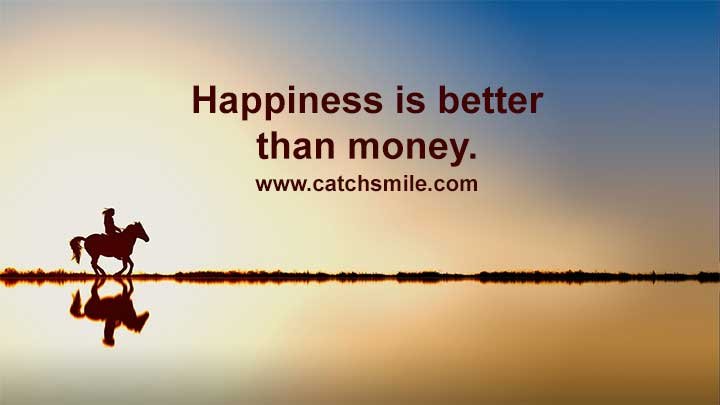
The quote "Happiness is better than money" implies that the state of being happy or experiencing joy and contentment holds more value and importance than possessing wealth or material possessions. It suggests that genuine happiness and well-being are more significant and fulfilling than the pursuit of monetary wealth. The quote challenges the notion that money alone can bring true happiness and suggests that there are deeper aspects of life that contribute to our overall well-being. It implies that while money can provide comfort and financial security, it does not guarantee genuine happiness or inner satisfaction. The statement emphasizes the idea that happiness is a subjective and internal state of being that cannot be fully attained or measured by material wealth. It suggests that happiness is derived from personal fulfillment, meaningful relationships, personal growth, good health, and a sense of purpose. While money can contribute to certain aspects of happiness, such as meeting basic needs and providing opportunities, the quote suggests that the pursuit of wealth should not overshadow the pursuit of true happiness. It implies that a focus solely on accumulating wealth can lead to neglecting other essential aspects of life, such as relationships, personal well-being, and experiences that bring joy and fulfillment. In summary, the quote highlights the belief that genuine happiness and well-being are of greater significance and bring a more fulfilling and meaningful life than the pursuit of monetary wealth alone. It encourages individuals to prioritize their happiness and well-being, recognizing that material possessions and financial success may not be the ultimate source of true contentment.

Happiness is better than money.

The quote "Happiness is better than money" implies that the state of being happy or experiencing joy and contentment holds more value and importance than possessing wealth or material possessions.…
Blog Creation Tips - Essential Guidelines

Blog Creation Tips: Essential Guidelines

Discover effective strategies and guidelines for creating an engaging and successful blog today. Blogging has become a popular way for individuals and businesses to share their ideas, experiences, and expertise…
Esta frase, "Haz el bien y el bien vendrá a ti", transmite un mensaje de reciprocidad y karma. En español, "hacer el bien" implica realizar acciones positivas y beneficiosas hacia los demás o hacia el mundo en general. La cita sugiere que si nos esforzamos por ser personas bondadosas, compasivas y generosas, experimentaremos las recompensas de esa bondad en nuestras propias vidas. El "bien" al que se hace referencia puede manifestarse de diferentes maneras, como el apoyo de otras personas, la gratitud, la felicidad interna o incluso circunstancias favorables. La idea central es que nuestras acciones tienen consecuencias y que, al sembrar semillas de bondad y generosidad, estamos creando las condiciones para recibir cosas positivas en nuestro propio camino. Al ser una fuerza positiva en la vida de los demás, estamos abriendo la puerta para que esas energías positivas regresen a nosotros. En resumen, esta frase nos recuerda que el acto de hacer el bien no solo beneficia a los demás, sino que también nos enriquece a nosotros mismos. Al cultivar una actitud de bondad y compasión, atraeremos y generaremos un entorno más positivo para nuestra propia vida.

Haz el bien y el bien vendrá a ti.

Esta frase, "Haz el bien y el bien vendrá a ti", transmite un mensaje de reciprocidad y karma. En español, "hacer el bien" implica realizar acciones positivas y beneficiosas hacia…